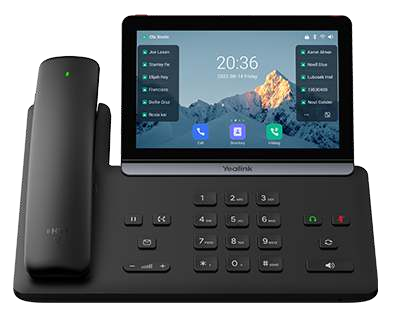
It is 8:31 on a Monday morning. Twelve patients are calling at once, two of them are unwell enough that it matters, the nurse is chairside, and the practice manager is watching reception drown. A medical phone system is the thing that makes that hour survivable — priority queues, overflow that actually answers, after-hours rules that reach the on-call doctor, and a fax that lands in Best Practice instead of on a tray.
Pear has built and supported phone systems for Australian medical practices since 2002. Hosted-X, X-Fax and Aria run on Australian servers, month-to-month, with a 30-day test drive before you port a single number.
★★★★★ 5.0 on Google · 500+ Australian businesses, including medical groups · No lock-in · 90-day Love Us or Leave Us · Data hosted in Australia · CyberCert SMB1001 Gold
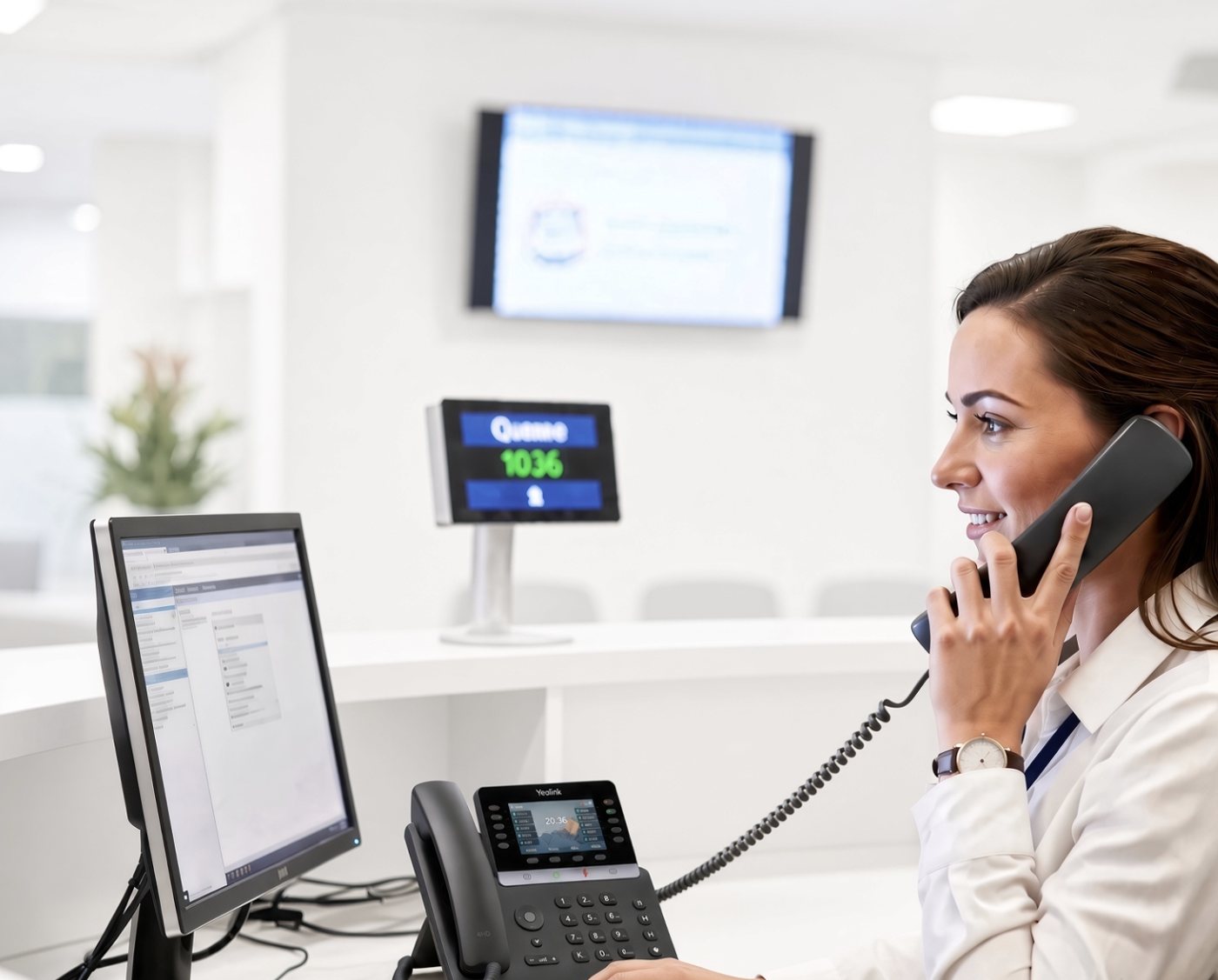





Almost every practice we visit has the same three failures, and none of them are the receptionist's fault.
Results, repeat scripts, new-patient bookings and a chest pain all wait in the same line, in the order they rang. Nobody can tell which call matters until it is answered.
When reception is on two calls, the third rings out. The patient rings the practice down the road. Multiply by the 8am rush every day and it is a measurable revenue leak — and a safety gap.
Most clinics switch voicemail off because an unheard emergency message is a liability. So evening and weekend calls simply ring out, and the on-call doctor is reached by a personal mobile number written on a sticky note.
A generic "small office" phone plan does not fix any of this. It gives you a menu and a hold tune. The fixes below are what a medical phone system actually has to do.
Every Hosted-X clinic build starts from the practice's real call flow — who rings, when, and what has to happen when nobody can pick up. The standard medical configuration:
"Press 1 for appointments, 2 for results, 3 for prescriptions" — and a nurse line that jumps the queue. Reception sees which queue each caller is in before they answer. Queue announcements, estimated wait and a call-back option keep the 8am rush civil.
When every receptionist is on a call, Aria — Pear's AI receptionist — picks up instead of the call ringing out. She books, takes a structured message with the patient's details, and advises anyone describing an emergency to call 000. No patient hears an engaged tone.
Opening hours, public holidays and the Christmas close-down are set in the portal by the practice manager, not by a support ticket. After-hours callers hear the right message, are offered Aria, or are routed to the after-hours service you nominate.
Route the on-call line to whichever doctor is rostered, from the portal, without giving out a personal mobile. Swap the roster in seconds. Every diverted call is logged.
A live box on the Hosted-X dashboard showing every call that came in, wasn't answered and hasn't been returned yet. Each entry disappears the moment someone calls the patient back. The job is to get it to zero before lunch.
Softphone apps put the practice number on a mobile or laptop for the practice manager, the nurse in the treatment room, or a doctor consulting from home. Same number, same queues.
| A medical phone system (Pear) | A generic small-business PBX | |
|---|---|---|
| The front door | Priority queues by call type, plus a nurse line that jumps the queue | One menu and one queue for everything |
| Fax | X-Fax straight into the doctor's Best Practice inbox | No fax path — or a fax machine on a dying copper line |
| After hours | Aria takes a structured message and directs urgency to 000 | A voicemail box nobody checks — or nothing |
| Staff safety | Built-in duress key on every handset — silent room-level alerts that support your practice-accreditation safety requirements | Not offered, or a third-party add-on |
| The contract | Month-to-month, 90-day Love Us or Leave Us | Commonly a 24–36 month reseller term |
Holding a generic PBX quote already? How to read it, in six checks →
Patient calls, voicemails and recordings are health information. Pear treats them that way.
We frame all of this around Australian law because that is the law that applies to an Australian practice. If a vendor leads with an overseas compliance badge, ask which Australian Privacy Principle it addresses instead.
Referrals, pathology, imaging and specialist letters still arrive by fax in Australian general practice, and they still have to be filed against the right patient. X-Fax is Pear's cloud fax, built for that job.
Faxes arrive as documents in the doctor's Best Practice inbox, routed to one doctor or several, with a notification when something new lands. Unlimited inbound pages on every plan, and every inbound fax is logged, so "did we get the referral?" is a search, not a hunt through a tray.
Send a referral to a specialist and a hospital at once, from any room or computer, without printing. Full history of every outbound fax, who sent it and when it was delivered.
With X-Fax Intelligence, Aria reads incoming faxes, identifies the patient and document type, and files them — so reception is checking her work, not doing it.
Best Practice is the integration we build for today. Pear is a Best Practice Connector partner; other practice software is on the roadmap and we will only name it here once it is live.
X-Fax plans start at $59.95 a month, or $119.95 with Aria Intelligence, month-to-month. Practices that still run a fax machine can move on a 30-day Fax Rescue without porting the fax number first.
Aria is Pear's AI receptionist, on Australian servers, and healthcare is what she was built around. Practices take her up in three steps — each one works on its own, and each is priced for a clinic, not an enterprise.
Most clinics switch voicemail off because an unheard emergency message is a risk nobody wants. Aria changes that: after hours and on overflow she takes a structured message with the patient's details — and she is designed to recognise urgency and direct callers to 000 instead of leaving them in a message bank. Voicemail stops being a liability and becomes part of your duty of care. From 55c a call — you only pay when she takes a message.
Everything in Aria Voicemail, plus she picks up in the queue when reception can't: answering, booking, taking messages and escalating to your team in real time. The 8:31am rush gets a second receptionist who never calls in sick. From 65c a call — you only pay for the calls she answers.
The complete AI receptionist: she answers the practice line like one of the team — greets patients, books appointments, answers common questions, takes messages and escalates to the right person. On Australian servers, fitted to your call flow. Early access — pricing on application.
One button on the desk phone turns any consult — in-room, telehealth, home visit — into structured SOAP notes, with referrals, care plans and certificates drafted for review. Any language in, English notes out, Best Practice–ready. One practice price with every clinician included, registrars and locums free. From $199 a month for the whole practice.
Aria reads every inbound fax, identifies the patient and document type, and files it — so referrals and results land where they belong and reception checks her work instead of doing it. Pairs with X-Fax into Best Practice, covered above. From $60 a month on top of X-Fax.
Plainly, because it matters in healthcare: Aria is a triage and documentation aid. She does not diagnose, she does not identify every emergency, notes are reviewed by the clinician before they enter the record, and recording requires patient consent. She works beside your team — never instead of clinical judgement.
A doctor alone in a consult room with an agitated patient needs a way to call for help that does not look like calling for help. Hosted-X handsets carry a programmable duress key: one press pages every other handset in the practice with the room number, silently, and can dial a nominated number at the same time. The same paging function covers the everyday jobs — "Dr Lee, your 10:15 is here" to the treatment room without a shouted corridor.
Duress is configured per room during the build, tested on go-live day, and documented so it survives staff turnover. It is one of the reasons multi-doctor practices choose desk handsets in consult rooms rather than app-only setups.
Pear runs phone, fax and internet for medical groups with dozens of sites — the largest spanning dozens of sites. The pattern that works:
More than 500 Australian businesses run on Pear, including medical groups and practices across general practice, specialist networks, day hospitals, allied health and aged care. Groups on Pear include Myhealth, GenesisCare, Healthe Care, Greenslopes and Advara, alongside hundreds of independent practices.
"Before we moved to Pear, losing our phones and internet was a regular thing — and in a medical clinic, that's not just an inconvenience, it stops us serving patients. Since switching everything across in December 2024, we haven't had a single outage. The tech staff are knowledgeable and keen to come up with individual solutions to meet our changing needs. No more call centres and waiting for call backs. It's been one of the best decisions we have made."
"As a busy medical centre, having reliable telecommunications is essential to our day-to-day operations. From the initial setup through to ongoing support, the team has been professional, responsive and easy to deal with. The transition was smooth and any questions were handled promptly. We would happily recommend Pear Australia to other medical and healthcare practices."
"Pear Telco have been our service provider for many years. We are a very busy medical practice and heavily dependent on our phones. Their customer service is unparalleled. The team truly goes above and beyond."
A practice cannot have a day of dead phones. So the switch is built around that constraint.
Everything is month-to-month — tell us before the 27th of any month — with a 90-day Love Us or Leave Us guarantee. How number porting works → · The test drive in detail →
Clinic builds are quoted, because queues, after-hours, fax and duress vary practice to practice. The shape of a typical quote:
| Component | What Pear includes | Typical range |
|---|---|---|
| Hosted-X per user | Queues, IVR, recording, apps, portal, Zero List, Australian support | Quoted per user · month-to-month |
| Handsets | New Yealink (with duress key) or reuse compatible phones | New Yealink handsets start from $285 to buy, or can be rented. |
| X-Fax | Cloud fax into Best Practice, unlimited inbound pages | $59.95 / mo · $119.95 with Aria Intelligence |
| Aria Voicemail / Queue Manager | Safe messages, live overflow answering, urgency directed to 000 | From 55c / 65c a call |
| Aria Scribe | Consult transcription and SOAP notes — every clinician included | From $199 / mo whole practice |
| Business NBN | Voice-ready, static IP, priority SLA, 4G backup available | From $105 / mo |
| Contract | Month-to-month, tell us before the 27th, 90-day guarantee | None |
Every Aria feature — safe voicemail, queue answering, consult notes, fax reading — is part of the same Pear platform as your phones and fax. Switch one on when the practice is ready; there's no third-party software to install, no extra vendor to manage, and one Australian support team for all of it. New Aria features arrive as platform updates — more are on the way.
For a sense of per-user pricing across small offices, see small business phone systems and the cost guide. Dental and aged-care pages are on the way.
Tell us how many rooms, how many sites and what 8:30am looks like. A person in Australia replies the same business day. Or call 1300 007 327.